

Melatonin Free Sleep Aid: Why Some Lifters Prefer It
Melatonin is everywhere, but serious lifters are quietly switching to melatonin-free formulas. If you're waking up foggy, dragging through morning training sessions, or feel like your sleep just isn't doing the recovery job it should, the hormone you're relying on might be the problem, not the solution.
The Problem With Melatonin for Hard-Training Athletes
Melatonin is a hormone, not a sedative. Its actual job is to signal your brain that it's dark outside and time to wind down. For most adults, that signal is already working fine. What breaks down after a brutal squat session, a late-night shift, or a double-dose pre-workout isn't your circadian signal. It's your nervous system still running at full throttle when you're trying to shut it down.
High-dose commercial melatonin products, many of which contain 5mg to 10mg per serving, can create real problems for performance athletes. Research notes that high doses common in commercial products may disrupt natural sleep architecture and leave athletes feeling sedated the next morning. That morning grogginess isn't just inconvenient. For competitors and first responders, it's a performance liability.
According to CDC data cited by health researchers, 1 in 3 U.S. adults already don't get enough sleep. Piling on exogenous hormone doses isn't fixing the root problem for most of them. And for athletes who already run hot on stimulants, melatonin tells your brain it's nighttime while your nervous system is still running laps.
Long-term daily use is also a legitimate concern. Taking melatonin every night may lead to dependency and disrupt your body's natural melatonin production over time, according to sleep health researchers. That's not a trade most serious athletes want to make.
What a Melatonin Free Sleep Aid Actually Does Differently
Instead of overriding your hormone signaling, a well-designed melatonin free sleep aid works with the natural pathways that govern nervous system relaxation, cortisol regulation, and sleep depth. The goal is not to knock you out. It's to get your body into a state where deep, restorative sleep happens on its own.
The key difference: quality non-melatonin formulas target the inputs that cause poor sleep in athletes, specifically elevated cortisol, an overactive nervous system, and muscular tension that lingers well past your last set.
| Sleep Problem | Melatonin Approach | Melatonin-Free Approach |
|---|---|---|
| High evening cortisol | Does not address | Ashwagandha (adaptogen) lowers cortisol |
| Nervous system overactivation | Signals timing only | GABA + L-theanine calm CNS directly |
| Muscle tension after training | No effect | Magnesium glycinate relaxes muscle tissue |
| Morning grogginess risk | High at 5-10mg doses | Low; no residual hormone effect |
| Dependency risk | Present with nightly use | Low for non-hormonal compounds |
This table is not a medical claim. Individual responses vary. Consult a healthcare provider before starting any new supplement protocol.
The Ingredients That Actually Move the Needle
Not every sleep supplement is worth shelf space. Here's what the research actually supports for athletes looking for a clean, effective sleep aid without melatonin.
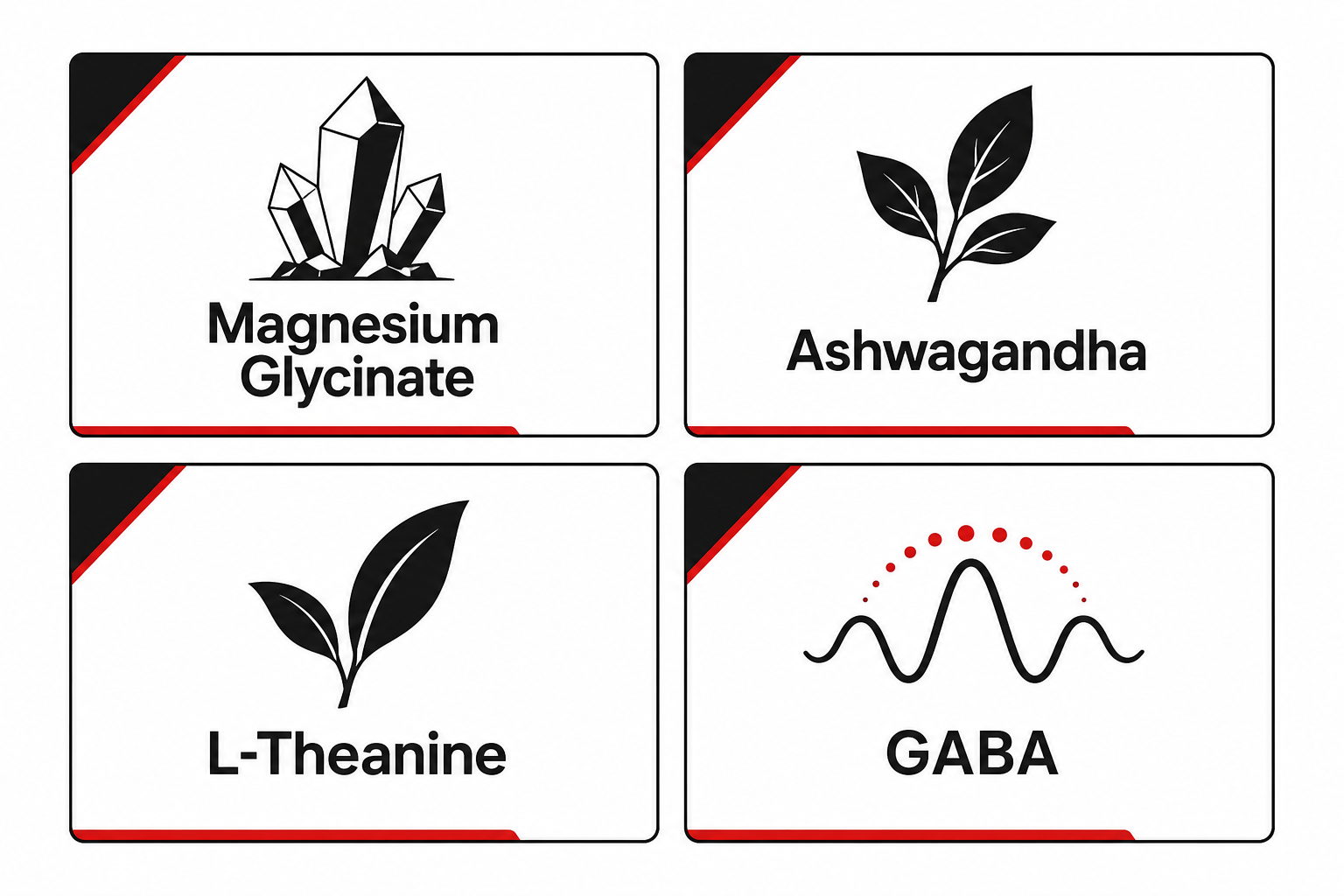
Magnesium Glycinate
Athletes lose significantly more magnesium through sweat and urine than sedentary individuals, with losses reaching up to 20% during intense training according to endurance sports nutrition researchers. Magnesium supports GABA-A receptor activity in the central nervous system, which reduces neuronal excitability and promotes the kind of physical relaxation that makes deep sleep accessible. A 2025 randomized, placebo-controlled trial found that 250mg of magnesium bisglycinate taken 30-60 minutes before bed significantly improved Insomnia Severity Index scores versus placebo over 8 weeks. Glycine, the amino acid paired with magnesium in glycinate form, also supports sleep by helping lower core body temperature.
Ashwagandha (KSM-66)
Ashwagandha is an adaptogen, which means it helps your body regulate the stress response rather than sedate it directly. For athletes, the most relevant mechanism is cortisol control. High evening cortisol is one of the most common drivers of difficulty falling asleep and waking in the middle of the night. A well-cited 2019 study published in Medicine found that adults taking 600mg/day of KSM-66 ashwagandha for 8 weeks showed a 27.9% reduction in serum cortisol compared to placebo. Ashwagandha also modulates GABA-A receptors through its active withanolide compounds, adding a secondary relaxation effect without making you sedated.
L-Theanine
L-theanine is an amino acid found naturally in green tea. It does not make you drowsy. What it does is promote alpha brain wave activity, the mental state associated with calm focus and relaxed alertness, which is exactly where you want to be heading into sleep. Research shows that an L-theanine and GABA combination reduced time to fall asleep and improved both REM and non-REM sleep quality. Effective sleep-support doses start around 100-200mg. L-theanine also pairs well with ashwagandha, with the two working through complementary mechanisms: one for immediate calm, one for ongoing cortisol regulation.
GABA
GABA (gamma-aminobutyric acid) is the primary inhibitory neurotransmitter in your brain. When GABA activity is high, your nervous system slows down, your muscles relax, and anxious mental chatter quiets. For athletes who train with high-stimulant pre-workouts, evening GABA levels can be suppressed for hours after training ends. A sleep formula that supports GABA directly addresses the mechanism keeping you wired at 11pm when your alarm is set for 5am. If you're curious about how stimulant load affects your nervous system, check out this breakdown of caffeine thresholds for high-stim training.
Why Lifters and First Responders Are Making the Switch
Strength athletes, powerlifters, and first responders share a problem that standard sleep aids were never designed for: irregular, high-demand schedules combined with stimulant use and nervous systems that are chronically overloaded.
A firefighter coming off a 24-hour shift does not need their body clock nudged. They need their nervous system to stop firing and their muscles to release the tension they've been holding all shift. A powerlifter who trains at 7pm with a high-stim pre-workout does not need a hormone signal. They need cortisol management and CNS downregulation.
That's the gap a properly formulated melatonin free sleep aid fills. Not a sedative. Not a hormone override. A targeted formula that addresses the actual reasons hard-training individuals struggle to get into deep, restorative sleep.
SuppDawg Supplements built Ruff Night specifically around this problem. It's a melatonin-free sleep and recovery support formula designed for people who actually push hard, whether that's in the gym, on shift, or both. Transparent label, fully disclosed ingredients, no proprietary blends, made in the USA in GMP-certified facilities. That's the standard SuppDawg holds every product to.
How to Stack Sleep Support Supplements Effectively
A melatonin-free sleep stack works best when the ingredients are sequenced properly and the doses are clinically relevant, not token amounts thrown in to make a label look impressive.
Here's a practical guide to building a recovery-oriented sleep routine:
- Timing: Take your sleep support formula 30-60 minutes before bed. Most non-melatonin ingredients need a short absorption window to start working.
- Consistency: Ashwagandha builds effects over several weeks of use. Don't expect one night of results. Magnesium and L-theanine can produce noticeable effects faster, but consistency compounds the benefit.
- Stimulant cutoff: If you're running a high-stim pre-workout or a non-stim pump formula later in the day, set a hard cutoff for caffeine at least 6 hours before bed. Your sleep formula does its best work when it's not fighting an active stimulant load.
- Darkness and temperature: Supplements support your biology. They don't replace the basics. A cool, dark room still matters.
- Track it: Use subjective markers like morning energy, mood on waking, and in-training performance after a week of consistent use. These tell you more than any app.
| Ingredient | Mechanism | Target Dose | Timeline |
|---|---|---|---|
| Magnesium Glycinate | CNS + muscle relaxation | 200-250mg elemental | Days to weeks |
| Ashwagandha KSM-66 | Cortisol reduction, GABA-A | 300-600mg | 2-8 weeks |
| L-Theanine | Alpha wave / calm focus | 100-200mg | 30-60 minutes |
| GABA | CNS inhibition | 250-750mg | 30-60 minutes |
Doses listed are general reference ranges. Always follow product label directions and consult a healthcare provider with specific concerns.
What to Look for in a Sleep Support Supplement
Not all sleep support supplements are created equal. The supplement industry has no shortage of underdosed proprietary blends that look good on a label but do nothing in the body. Here's how to evaluate what you're actually buying:
- Full label disclosure: Every ingredient and dose is listed. No proprietary blends hiding small amounts behind a total weight.
- Clinically relevant doses: If the research on ashwagandha shows effects at 300-600mg, a product with 50mg is not going to move the needle.
- No melatonin filler: Some brands include trace melatonin amounts they don't disclose clearly. Check the full ingredient panel.
- GMP-certified manufacturing: This tells you the product is made in a facility held to consistent quality standards.
- Designed for performance, not general wellness: Recovery sleep for a 250-pound powerlifter has different demands than a product designed for casual users.
For a comparison of pre-workout stimulant philosophies that also speaks to the formulation standards SuppDawg applies across the whole product line, read High-Stim vs Non-Stim Pre-Workout: Which One Should You Use?
The Recovery Equation
Sleep is where training results actually materialize. Muscle protein synthesis, hormone restoration, central nervous system recovery, and cognitive reset all happen during deep sleep. A sleep aid that leaves you groggy, dependent, or hormonally disrupted is actively working against the results you're training for.
A well-formulated melatonin free sleep aid does not sedate you. It removes the obstacles standing between you and the deep, restorative sleep your body already knows how to produce. That's the performance edge most athletes are leaving on the table. Built for the grind. All Bite. No Bark.
Frequently Asked Questions
Is a melatonin free sleep aid effective for athletes? Yes. For athletes with high stimulant use or elevated cortisol, non-melatonin ingredients like ashwagandha, magnesium, and L-theanine often address the actual causes of poor sleep more directly.
Why do some lifters avoid melatonin? High-dose melatonin can cause morning grogginess, may disrupt natural hormone production with nightly use, and does not address nervous system overactivation from stimulants.
What ingredients work in a melatonin-free sleep supplement? Magnesium glycinate, ashwagandha KSM-66, L-theanine, and GABA are the most research-supported non-melatonin sleep support compounds for active individuals.
When should I take a melatonin-free sleep supplement? Most formulas work best taken 30-60 minutes before bed, after your last meal and any evening supplementation is complete.
Can I use a melatonin-free sleep aid every night? The non-hormonal ingredients in most melatonin-free formulas are considered safe for consistent nightly use. Consult a healthcare provider if you have specific medical considerations.
Sleep Aid for Lifters What Actually Helps Recovery Overnight
Why Sleep Matters More When You Are Chasing Hard Sessions
Related Posts

Thermogenic vs Fat Burner What's the Real Difference When Cutting

Creatine Bloating Why It Happens and How to Avoid It

Best Creatine for Beginners: Monohydrate Dosing and What to Buy First

Best Non-Stim Pre-Workout for Night Workouts Pumps Without Wrecking Sleep

Valerian Root vs Melatonin Which Sleep Aid Fits Your Routine

Best Sleep Aid for Shift Workers When Your Schedule Is Broken

Best Nitric Oxide Supplements for Pumps What Lifters Should Compare
