

Sleep Aid for Lifters What Actually Helps Recovery Overnight
Your gains do not happen in the gym. They happen while you sleep. If you are training hard and sleeping poorly, you are leaving size, strength, and performance on the floor every single night. This guide breaks down what a real sleep aid should do for lifters, which ingredients actually matter, and why most options on the market miss the mark.
Why Sleep Is the Most Underrated Part of Your Training Program
Every serious lifter talks about training and nutrition. Almost nobody talks about sleep with the same intensity, even though sleep is when your body does most of its actual building. During deep sleep, the body ramps up growth hormone secretion, drives muscle protein synthesis, replenishes glycogen stores, and repairs connective tissue damaged during training. Cut that window short, and you cut your results short.
The science backs this up hard. A 2025 meta-analysis published in Frontiers in Physiology confirmed that sleep deprivation impairs muscle strength, speed, and aerobic performance across both trained athletes and non-athletes. A separate MDPI review found that chronic sleep deficiency raises cortisol, suppresses testosterone and growth hormone, and directly limits protein synthesis and muscle recovery capacity. That is not a minor edge-case problem. That is the difference between adaptation and spinning your wheels.
For athletes and first responders pulling irregular shifts, the stakes are even higher. Poor sleep does not just blunt your gains; it raises injury risk and slows reaction time when it matters most.
The Problem with Most Sleep Aids on the Market
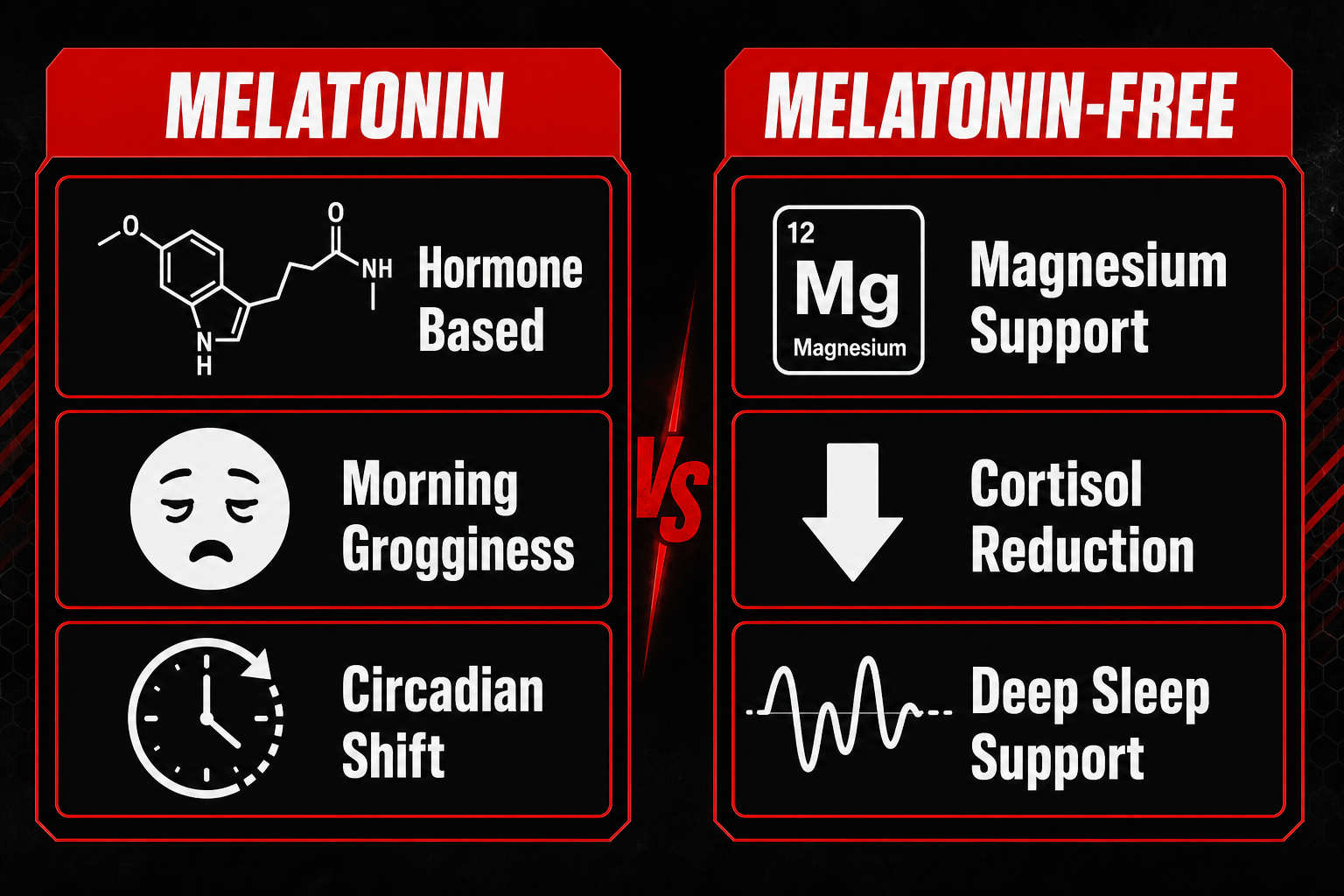
Walk into any pharmacy or scroll through Amazon and you will see one ingredient on almost every label: melatonin. Usually dosed at 5 mg or 10 mg, sometimes higher. The reality is that melatonin is a hormone that signals to your brain when it is time to sleep. It does not build sleep quality. It does not support deep wave sleep. It does not help your muscles recover.
High-dose melatonin also comes with a well-documented downside: next-morning grogginess, vivid dreams, and potential disruption to your body's natural hormone production with chronic use. For a lifter or first responder who needs to be sharp the moment they wake up, waking up foggy is not a tradeoff worth making.
A quality melatonin free sleep aid takes a different approach entirely. Instead of overriding your circadian signal with an exogenous hormone, it works with your nervous system to calm the body, reduce cortisol, support GABA activity, and create the internal conditions for deep, restorative sleep. That is the kind of sleep that actually builds you back up.
Read More: The Best Sleep Supplements for Deep Recovery (2026 Guide for Real Results)
The Ingredients That Actually Work
Not every ingredient on a sleep label earns its spot. Here is what the research actually supports for lifters specifically.
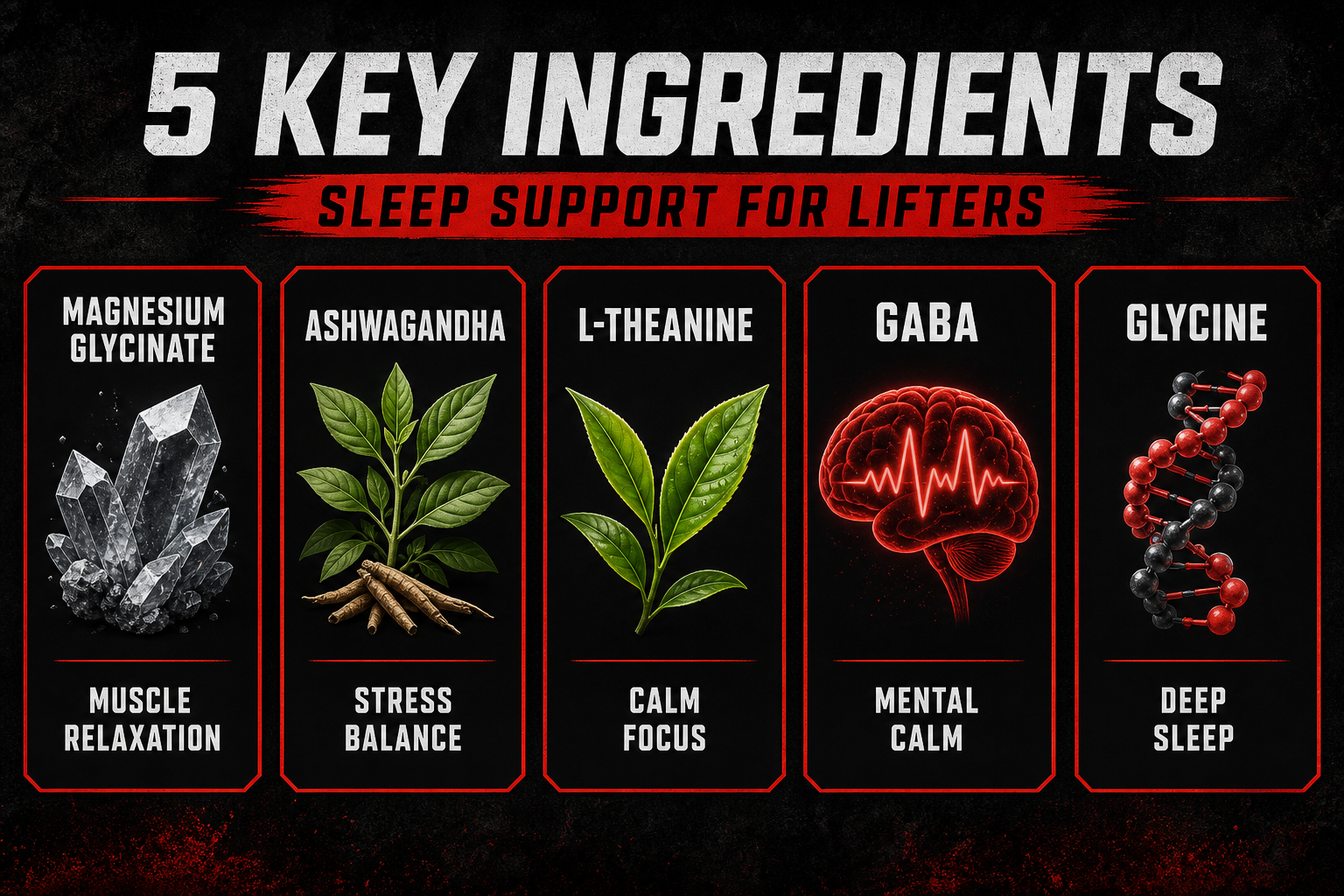
Magnesium Glycinate
Magnesium is the highest-priority sleep mineral for high-output athletes. Research consistently shows that nearly half of Americans do not get enough dietary magnesium, and athletes training at volume have even greater needs due to sweat loss and metabolic demand.
The glycinate form binds magnesium to the amino acid glycine, which improves absorption and adds a secondary calming effect via glycine's own role in the nervous system. Magnesium glycinate supports NMDA-receptor-mediated calming, helps muscles relax overnight, and promotes slow-wave sleep, the deep stage where most physical repair happens. Avoid cheap magnesium oxide formulas; the absorption rate is poor and the gut side effects are real.
Ashwagandha (KSM-66)
High training loads keep your sympathetic nervous system elevated long after you rack the bar. That is a cortisol problem, and cortisol is the enemy of sleep. KSM-66 ashwagandha is the most studied extract form, with clinical data showing it reduces cortisol levels and blunts sympathetic nervous system activity that heavy training creates. For powerlifters, strongman competitors, and anyone pushing serious volume, this is not just a nice-to-have. It directly addresses one of the root causes of training-related sleep disruption.
L-Theanine
L-Theanine is an amino acid found naturally in green tea, and it promotes parasympathetic (rest and digest) activation without sedation. It works through GABAergic pathways to quiet mental noise without making you feel drugged. If your brain is still running through sets, reps, and the next day's training plan when your head hits the pillow, L-theanine helps shut that down. A 2025 Oxford narrative review identified L-theanine as presenting "promising sleep-promoting properties" alongside glycine.
GABA
GABA is the primary inhibitory neurotransmitter in your central nervous system. It tells your brain to downshift. Supplemental GABA supports the transition from alert to relaxed, which is exactly what a high-stim athlete needs after a hard training session, especially if you have been running a pre-workout with significant caffeine load earlier in the day.
If you are also thinking about your pre-workout timing and how caffeine interacts with your sleep window, this guide on caffeine dosing and high-stim pre-workouts is worth reading.
Glycine
Glycine is an amino acid that acts on the central nervous system to lower core body temperature, one of the key physiological triggers for falling asleep. Research cited in a 2025 Oxford review suggests glycine shows real promise for sleep onset and sleep quality. As a bonus, glycine is directly involved in collagen synthesis, which means it supports joint and connective tissue health overnight as well. For a powerlifter grinding heavy pulls and squats, that is a meaningful secondary benefit.
Comparing Sleep Aid Approaches: Melatonin vs. Melatonin-Free Formulas
| Feature | Melatonin-Based | Melatonin-Free |
|---|---|---|
| Mechanism | Hormone signal (circadian timing) | CNS calming, cortisol reduction, GABA support |
| Deep sleep quality | Minimal direct support | Strong (magnesium, ashwagandha, glycine) |
| Morning grogginess | Common at 5-10 mg | Rare with properly dosed formulas |
| Daily use | Some concerns with long-term hormone use | Generally safe for nightly use |
| Best for athletes | Jet lag, travel, circadian disruption | Nightly recovery and performance |
| Habit forming risk | Low but hormonal dependency possible | Low; ingredients are essential nutrients |
The takeaway is straightforward. If you are using a sleep aid nightly for recovery, a melatonin-free formula built around magnesium, ashwagandha, L-theanine, GABA, and glycine is the smarter choice for a serious lifter.
What to Look for in a Sleep Support Supplement
The supplement industry is littered with underdosed, proprietary blends that hide behind impressive label copy. Here is how to evaluate any sleep support supplement before you buy.
Fully disclosed label. Every ingredient and every dose listed. No proprietary blends, no hidden amounts. If a brand will not tell you how much magnesium glycinate is in their formula, that is a red flag.
Clinically relevant doses. Magnesium glycinate in the 200 to 400 mg range. KSM-66 ashwagandha at 300 to 600 mg. L-Theanine at 100 to 200 mg. GABA at 100 to 300 mg. Doses below these thresholds exist mostly for label credibility, not actual effect.
No artificial sedatives or fillers. Diphenhydramine (the antihistamine in most over-the-counter sleep aids) will knock you out, but it also suppresses REM sleep, causes next-day impairment, and builds tolerance fast. That is not recovery. That is sedation.
GMP-certified manufacturing. This ensures the product contains what the label says and nothing it should not.
Ruff Night: Built for Athletes Who Actually Push It
SuppDawg Supplements developed Ruff Night specifically for this gap in the market. It is a melatonin-free sleep and recovery formula built with fully disclosed ingredients, effective doses, and zero gimmicks. The formula is designed for the strength athlete, the first responder running on irregular shifts, the serious gym-goer who needs to be sharp the next day, not just knocked out for the night.
This is consistent with the brand's founding philosophy: first responder-owned, built by athletes who live the demands they are supplementing for. No proprietary blends. No underdosed filler. Just the ingredients that work, at amounts that actually do something.
If you are running a high-stim pre-workout like Shock Collar earlier in the day, Ruff Night completes the other side of the performance equation: hard training in, deep recovery out.
Sleep Hygiene Still Comes First
No sleep support supplement, no matter how well formulated, will fully compensate for broken sleep habits. The research is consistent on this point. Supplements support the conditions for quality sleep; they do not override poor behavior.
The basics still matter: consistent sleep and wake times, a dark and cool room, cutting off caffeine at least 6 to 8 hours before bed, and avoiding heavy training within 2 hours of sleep when possible. These habits amplify what a well-designed sleep supplement can do.
For athletes managing high training volume and the demands of demanding work schedules, the combination of dialed-in sleep hygiene and the right supplement stack is what separates good recovery from great recovery.
How to Time Your Sleep Support Supplement
Timing matters more than most people realize. Melatonin-free formulas generally work best when taken 30 to 60 minutes before you plan to sleep. This gives magnesium and L-theanine time to reach therapeutic levels in the bloodstream before your head hits the pillow.
If you tend to train late in the evening, consider taking your sleep supplement immediately post-training. The overlap between your cool-down window and the supplement's onset can actually work in your favor.
A useful comparison: think of your sleep supplement as you would your creatine timing protocol. Consistency and timing both matter. Neither is magic in a single dose; both compound over time.
Recovery Across the Full Spectrum
Sleep is one side of the recovery equation. Creatine, proper protein intake, and thoughtful programming cover the rest. For athletes thinking about building a complete performance stack, understanding how high-stim and non-stim pre-workouts fit into your training week is part of the same conversation.
Recovery is not passive. It requires the same intentionality as your training. You plan your sets and your nutrition; your recovery window deserves the same attention.
| Supplement | Primary Benefit for Lifters | Dose Range | Timing |
|---|---|---|---|
| Magnesium Glycinate | Deep sleep, muscle relaxation | 200-400 mg | 30-60 min before bed |
| KSM-66 Ashwagandha | Cortisol reduction, sleep quality | 300-600 mg | 30-60 min before bed |
| L-Theanine | CNS calming, sleep onset | 100-200 mg | 30-60 min before bed |
| GABA | Nervous system downshift | 100-300 mg | 30-60 min before bed |
| Glycine | Temperature regulation, joint support | 2,000-3,000 mg | 30-60 min before bed |
Frequently Asked Questions
Is a melatonin-free sleep aid effective for lifters? Yes. Ingredients like magnesium glycinate, ashwagandha, L-theanine, and GABA support deep sleep and recovery without the grogginess that high-dose melatonin often causes.
When should I take a sleep support supplement? Take it 30 to 60 minutes before bed. This gives ingredients time to reach effective levels in your system before sleep onset.
Can I take a sleep supplement every night? Generally yes. Ingredients like magnesium glycinate, L-theanine, and glycine are nutrients your body uses regularly and are safe for nightly use.
Will a sleep supplement interfere with my pre-workout? Not if you time it correctly. Cut off high-stim pre-workouts at least 6 hours before sleep and use your sleep supplement in its proper window.
Does sleep actually impact muscle building? Directly. Growth hormone peaks during deep sleep, protein synthesis accelerates, and muscle glycogen is restored. Poor sleep measurably reduces all three.
Keep exploring Sleep & Recovery
Build on this guide with practical next steps:
Supplement information is provided for educational purposes. Review the product label, directions and warnings, and consult a qualified healthcare professional before use when appropriate. These statements have not been evaluated by the Food and Drug Administration. This information is not intended to diagnose, treat, cure or prevent any disease.
About the author
Christopher Northern — Christopher Northern is the founder of SuppDawg, a career firefighter/paramedic and strength-sport competitor. He writes from firsthand experience with shift work, training, and transparent supplement labels.
How this guide was prepared
This guide was reviewed against current product labels and publicly available educational sources. It is intended for general education, not diagnosis or treatment, and was last updated August 8, 2026.
Best Thermogenic Fat Burners for Harder Training and Cutting
Nighttime Recovery for Powerlifters: Build a Better Wind-Down
Related Posts

Nighttime Recovery for Powerlifters: Build a Better Wind-Down

Melatonin-Free Sleep Aids: How to Choose Your Formula

Why Choose Non-Stim Pre-Workout at Night?
