

Best Nitric Oxide Supplements for Pumps What Lifters Should Compare
Lifters comparing nitric oxide supplements for pumps should start with one question: do you want a true non-stim pump formula or a pre-workout that includes pump support? For most pump-focused shoppers, the best nitric oxide supplement is the one with transparent dosing, strong L-citrulline support, useful hydration ingredients, and a stimulant profile that matches when you train. On SuppDawg's official site, Bite Down Non-Stim Pre-Workout is the cleaner fit for stimulant-free pump sessions, while Shock Collar High-Stim Pre-Workout is the better fit only if you also want a heavy energy hit.
You are not asking whether pumps feel good. You already know they do. What you are actually trying to figure out is whether the tub you are about to buy has a formula that earns those pumps or just looks impressive on the label.
The problem is that nitric oxide products get lumped together even though they are doing completely different jobs. Some are built from the ground up as non-stim pump tools. Others are full pre-workouts with a pump ingredient on the side.
This guide compares what actually matters on a pump-supplement label: citrulline form and dose context, nitrate support, hydration ingredients, stimulant load, and whether the formula fits when and how you train.
What actually makes a nitric oxide supplement good for pumps
A good pump supplement is judged by formula fit, not by the words nitric oxide on the front label. Pumps come from overlapping mechanisms, and products that only chase one pathway often deliver underwhelming results.
There are three main mechanisms worth understanding:
- Nitric oxide support: Ingredients like L-citrulline, citrulline malate, beet root (as a dietary nitrate source), and Nitrosigine work through nitric oxide pathways to support blood flow and vasodilation.
- Cell hydration and volumizing: Glycerol pulls water into muscle tissue, contributing to the full, tight feeling that lifters associate with a strong pump.
- Electrolyte balance: Sodium and other electrolytes, such as Pink Himalayan Salt, support fluid regulation and overall muscle function during training.
Transparent labels matter here because you need enough information to compare actual doses. If a label hides amounts inside a proprietary blend, you cannot tell whether the formula delivers meaningful support or just enough of each ingredient to claim it is included.
The NIH Office of Dietary Supplements notes that evidence on most exercise-performance supplements varies considerably and encourages a cautious approach before drawing strong conclusions. That guidance applies directly to pump supplements: the category is not smoke and mirrors, but no single formula guarantees a specific response.
| Mechanism | Key ingredients | What it does |
|---|---|---|
| Nitric oxide pathway | L-citrulline, citrulline malate, beet root, Nitrosigine | Supports vasodilation and blood flow |
| Cell volumizing | Glycerol | Draws water into muscle tissue for fullness |
| Electrolyte support | Pink Himalayan Salt, electrolytes | Supports fluid regulation and muscle function |
| Focus support | Tyrosine, Choline | Cognitive support during training (non-stim route) |

As a strength athlete competing in powerlifting and strongman, I look at whether a formula is built for pure pumps or trying to do five jobs at once. Most that try to do everything end up doing nothing especially well.
The best nitric oxide supplements for pumps compared
Disclosure: SuppDawg Supplements sells some of the products mentioned below. Product details were verified from official brand pages. This comparison focuses on verified options with official data available during research, not a full market-wide ranking. Prices and on-site details were checked in July 2026.
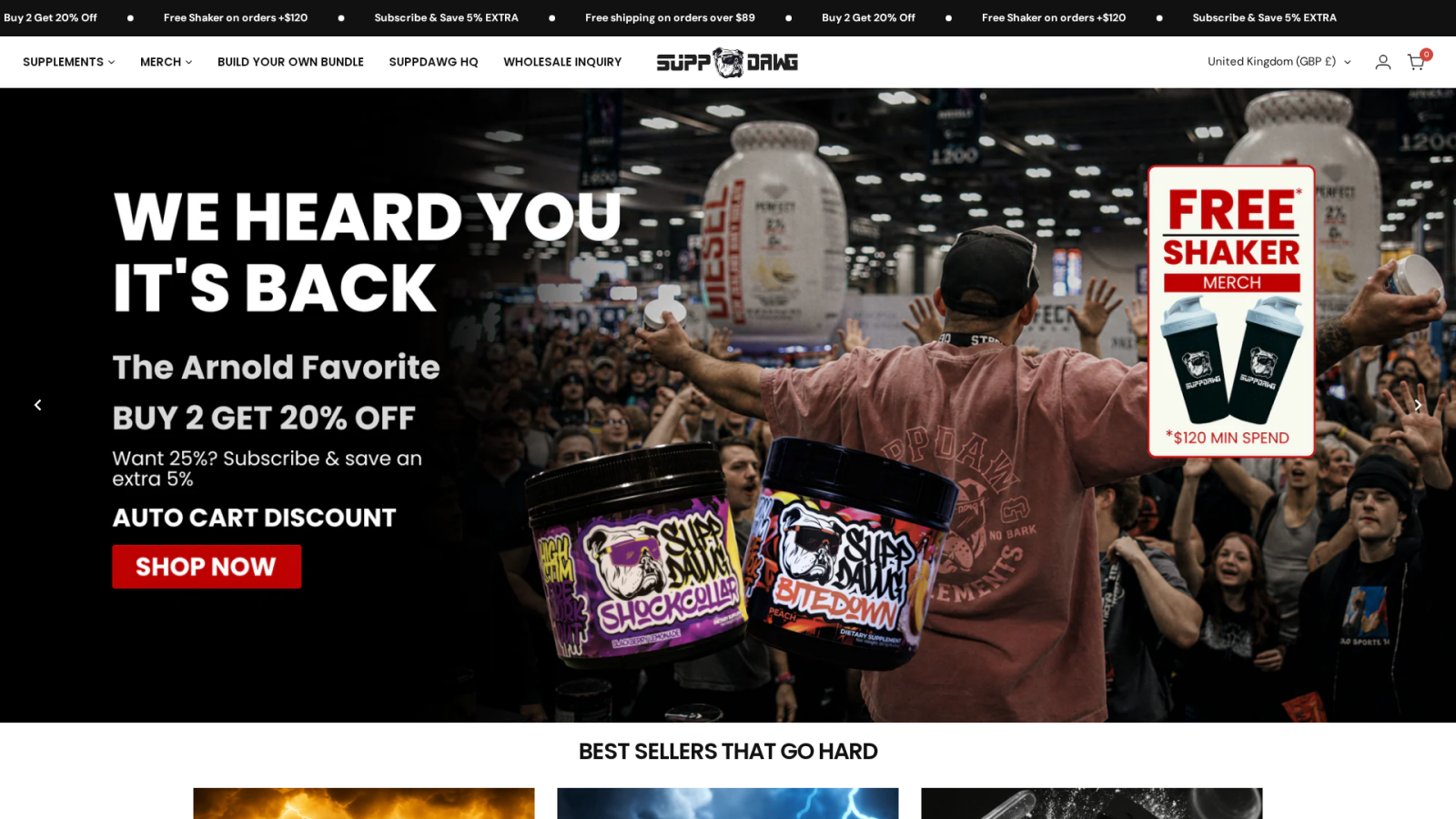
| Product | Best for | Stim profile | Key pump-support ingredients (official page) | Price (July 2026) | Honest limitation |
|---|---|---|---|---|---|
| Bite Down Non-Stim Pre-Workout | Stimulant-free pump sessions, late training, stim cycling | Zero stimulants | L-Citrulline, Betaine, Glycerol, Pink Himalayan Salt, Tyrosine, Choline | $39.99 | Not suited for lifters who want caffeine-driven energy |
| Shock Collar High-Stim Pre-Workout | High-output daytime sessions needing pumps plus heavy energy | 400 mg caffeine, Yohimbine | L-Citrulline, Nitrosigine, Glycerol Monostearate, Beta-Alanine | $44.99 | Not suited for late-night training or caffeine-sensitive users |
Best for stimulant-free pump training: Bite Down
Verdict: The cleanest option for lifters who want pump-focused training without any stimulant load.
Bite Down non stim pre-workout from SuppDawg Supplements is positioned around nitric oxide support, hydration, and cognitive clarity without caffeine. According to the official product page, it includes L-Citrulline, Betaine, Glycerol, Pink Himalayan Salt, Tyrosine, and Choline.
- No caffeine, no jitters, no crash
- Glycerol and Pink Himalayan Salt support hydration-driven fullness
- Tyrosine and Choline provide focus support without central nervous system stimulation
- Designed for late-night workouts or any training window where stimulants would cause problems
- Ideal for stim-cycling periods when you need to pull back from caffeine without losing training quality
Honest limitation: Bite Down is not the right pick if you want a hard energy hit or a traditional high-caffeine pre-workout experience. The pump and hydration support are real, but the energy is yours to bring.
Best for lifters who want pumps with heavy stimulant energy: Shock Collar
Verdict: A high-stim pre-workout with pump support built in, not a pure nitric oxide supplement.
Shock Collar high-stim pre-workout is built around 400 mg of caffeine per serving alongside Yohimbine for energy, with L-Citrulline, Nitrosigine, and Glycerol Monostearate providing the pump-support layer. It is a dual-function product, not a dedicated nitric oxide formula.
- Strong fit for daytime or high-output sessions in lifters who already tolerate heavy stimulants
- L-Citrulline and Nitrosigine support nitric oxide pathways alongside the stimulant stack
- Pump support is real but secondary to the energy and focus design of the formula
Honest limitation: 400 mg of caffeine is a serious dose. This is not appropriate for late-night training, caffeine-sensitive users, or anyone who does not already have experience with high-stim products.
Best if you want to build a pump-focused stack instead of relying on one tub
Some lifters do not want to choose between a non-stim pump product and a high-stim pre-workout. The better move is to run them separately based on the session.
Bite Down handles pump and hydration on days or times when stimulants are off the table. Shock Collar handles the heavy-energy sessions. For lifters who also want daily creatine support in the mix, BuffDawg creatine daily blend fills that role as a standalone option.
Creatine is not a nitric oxide ingredient, but it supports strength and muscle output that work alongside a pump formula rather than replacing it. For more on how the two compare, creatine vs pre-workout covers that decision in detail.
How to compare pump supplements without getting fooled by hype
Most pump-supplement labels look impressive. The real test is whether the formula is designed to deliver pumps or designed to look like it does. Knowing what to look for in a pre-workout formula helps cut through the noise before you spend money.
Start with L-citrulline, not flashy branding
L-citrulline is the first ingredient family most pump-shoppers should locate on the label. It supports arginine availability in the body, which feeds the nitric oxide pathway that drives vasodilation and blood flow to working muscle.

You will also see citrulline malate, which combines L-citrulline with malic acid. Both forms are commonly used in pump formulas. The distinction is less important than whether the label shows the actual amount. If a product hides its citrulline dose inside a proprietary blend, you cannot confidently compare it to any transparent formula.
Ask whether you want a true pump product or a nitric oxide pre-workout
This is the split that most listicles miss. A true pump product like Bite Down is built entirely around blood flow, hydration, and cellular volumizing with no stimulant load. A nitric oxide pre-workout like Shock Collar layers pump-support ingredients onto a heavy stimulant base.
Neither is objectively better. The right choice depends on when you train, how much caffeine you tolerate, and what job you need the product to do.
Check for hydration and volumizing support
Glycerol is the ingredient most commonly tied to the full, skin-tight pump feeling that goes beyond what nitric oxide support alone produces. It works by drawing water into muscle cells, increasing cell volume during training. Electrolytes like Pink Himalayan Salt complement this by helping regulate fluid balance.
These mechanisms are not the same as nitric oxide pathways, and they should not be conflated. But in a well-built pump formula, they work alongside citrulline and nitrate support to produce a noticeably different training feel than nitric oxide support alone.
Do not ignore stimulants, timing, and training schedule
For shift workers, first responders, and anyone who trains at irregular hours, the stimulant profile of a pump supplement is as important as its ingredient list. Taking 400 mg of caffeine at 9 pm is a formula for a sleepless night, not a better pump.
If you train late, cycle off stimulants, or work irregular shifts, the stimulant profile should be the first filter applied, not the last. The best pump formula in the world is the wrong choice if it wrecks your sleep or spikes your tolerance past useful.
Which nitric oxide ingredients matter most for lifters?
Not every pump ingredient carries the same weight of evidence. Prioritizing by confidence level rather than by how exotic an ingredient sounds is the more useful approach.
L-citrulline and citrulline malate
L-citrulline is the most widely used and best-supported ingredient in the pump-supplement category. It converts to arginine in the kidneys, which then supports nitric oxide production and the vasodilation that follows. Citrulline malate adds malic acid, which is associated with aerobic energy production, though the direct performance advantage of one form over the other is not definitively settled in the research.
For practical purposes, look for a transparent label that shows the actual citrulline amount. That lets you make a real comparison between formulas rather than guessing.
Beet root and dietary nitrate
Beet root is a commonly cited nitric oxide support ingredient, but the evidence behind it deserves an honest read. Research supporting dietary nitrate for exercise performance, including a systematic review and meta-analysis on resistance exercise outcomes, typically draws from studies using beetroot juice or concentrated dietary nitrate protocols.
Additional systematic review evidence suggests performance effects are generally small rather than dramatic, and the form and dose of nitrate matter considerably. A beet-root powder included at a token amount on a supplement label is not the same thing as a standardized dietary nitrate protocol.
Beet root belongs in a pump formula as a supporting ingredient, not as the primary headline claim.
Agmatine, Nitrosigine, and other add-ons
Agmatine is commonly included in pump formulas and is thought to influence nitric oxide pathways through arginine metabolism. Nitrosigine is a patented form of arginine and silicon that some research suggests may support nitric oxide levels. Both appear in pump-supplement formulas at various doses.
The direct high-quality evidence for these ingredients in the specific context of resistance training and pump enhancement is thinner than the evidence base for citrulline and dietary nitrate. Treat them as potentially useful support ingredients, not primary proof points, and keep your evaluation anchored to the core formula first.
What should different types of lifters buy?
The best nitric oxide supplement is the one that fits how, when, and why you train.

If you train at night and still want a big pump
The answer is a non-stim route, full stop. Taking a high-caffeine pre-workout at 9 pm to chase a late pump trades short-term training feel for disrupted sleep and slower recovery. Neither is worth it.
Non stim pre workout for late-night training covers this decision in more detail. Bite Down is specifically positioned for this use case, with citrulline, glycerol, and electrolytes doing the work without touching your sleep architecture.
If you want pumps but also need high energy for brutal sessions
Shock Collar is the honest answer here, with one clear caveat: respect the stimulant dose. At 400 mg of caffeine, this is a product for experienced lifters who already know how their body handles heavy stims. The pump-support layer from citrulline, Nitrosigine, and glycerol monostearate is real and purposeful, but this formula is fundamentally a high-energy product with pump ingredients, not the reverse.
If you are stacking creatine with a pump supplement
Creatine supports strength output and muscle volumizing through a completely different mechanism than nitric oxide ingredients. Running a daily creatine product like BuffDawg creatine daily blend alongside a dedicated pump formula is a sensible stack for lifters focused on both performance and muscle fullness.
Do not expect creatine to replace a pump supplement or vice versa. Each product has a distinct job.
If you are sensitive to caffeine or cycling off stimulants
Stimulant tolerance matters more than most pump-supplement comparisons acknowledge. If you have built a high caffeine tolerance and are cycling off, or if you are simply sensitive to caffeine, a stimulant-free pump formula gives you training support without compounding the problem.
Bite Down is the direct fit here. The formula is built to stand on its own without requiring a stimulant hit to make the session feel productive.
How we evaluated these nitric oxide supplements
This comparison is based on official brand pages and authoritative ingredient research, not independent lab testing. The scope is intentionally limited to products with enough official information available to compare fairly.
Evaluation criteria:
- Formula purpose: is it built for pumps or does it include pump support as one of several goals?
- Label transparency: are ingredient amounts fully disclosed?
- Nitric oxide-supporting ingredients: citrulline, nitrate sources, Nitrosigine
- Hydration support: glycerol, electrolytes
- Stimulant profile: stim-free versus stim-heavy
- Practical fit for training time
- Current official price (checked July 2026)
Scope limitations:
- We did not include unverified marketplace listings, products without official data, or options we could not confirm through current brand pages.
- This guide does not attempt a full market-wide ranking. It focuses on verified options from SuppDawg Supplements as a starting point for shoppers comparing pump formulas.
- Direct high-quality evidence for agmatine and Nitrosigine is less robust than the evidence for citrulline and dietary nitrate. Those ingredients are framed accordingly.
- Manufacturing certifications referenced in brand context were not independently re-verified during research.
Prices and on-site details were checked on official brand pages in July 2026. Prices and availability can change.
FAQ
Do nitric oxide supplements actually work for pumps? Yes, with realistic expectations. Ingredients like L-citrulline and dietary nitrate have research supporting their role in nitric oxide production and blood flow, though response varies by individual, dose, and formula quality.
What is the difference between a pump supplement and a pre-workout? A pump supplement focuses entirely on blood flow, hydration, and vasodilation, often without stimulants. A pre-workout typically combines energy ingredients like caffeine with pump support as one component of a broader formula.
Is L-citrulline better than arginine for pumps? Generally yes. L-citrulline converts to arginine in the kidneys more efficiently than oral arginine itself, which tends to be broken down before reaching circulation. Most pump formulas have moved toward citrulline for this reason.
Can you take a nitric oxide supplement at night? Yes, if it is stimulant-free. A non-stim pump product like Bite Down contains no caffeine and is specifically designed for late-night or evening training windows without disrupting sleep.
What ingredients should I look for in a pump supplement? Start with L-citrulline or citrulline malate at a disclosed dose. Look for glycerol for volumizing, electrolytes for hydration support, and optionally beet root or Nitrosigine as secondary support ingredients.
Does beet root really help with workout pumps? Beet root can contribute to nitric oxide support as a dietary nitrate source, but the research is strongest for standardized beetroot juice or nitrate protocols at specific doses. Not all beet-root powders on supplement labels are equivalent to those protocols.
Can I stack creatine with a pump supplement? Yes. Creatine and pump supplements work through different pathways and complement each other well. Creatine supports strength and power output; pump formulas support blood flow and muscle fullness during training.
Are stimulant-free pump supplements weaker than regular pre-workouts? Not in the pump department. A well-formulated non-stim product can produce stronger pumps than a stim-heavy pre-workout that only includes token amounts of pump ingredients. The stimulant removal does not weaken the nitric oxide or hydration stack.
What should I avoid in a nitric oxide supplement? Avoid proprietary blends that hide ingredient amounts, formulas with only one weak pump ingredient, and products that pair a heavy stimulant load with your late training schedule. Also watch for inflated claims around guaranteed results.
How long before training should you take a pump supplement? Most pump formulas are designed to be taken 20 to 30 minutes before training, though check the specific product guidance. Ingredients like glycerol and citrulline need time to reach meaningful blood levels before your session starts.
For additional questions, the SuppDawg FAQ page covers product-specific and usage questions.
How to make the right pick for your training style
The main decision fork is simple: pure pump support or pumps paired with heavy stimulant energy?
Before you buy, run through these three questions:
- When do you train? Late nights and irregular shifts push you toward a stimulant-free formula.
- Do you want pure pumps or pumps with a hard energy kick? That single answer separates Bite Down from Shock Collar with no ambiguity.
- Is the label transparent enough to compare confidently? If you cannot read the actual doses, you cannot make a real comparison.
If a stimulant-free pump product built around citrulline, glycerol, and electrolytes fits your training window, Bite Down Non-Stim Pre-Workout is the direct route. If you want a high-stim session where pumps are part of the package and you know your caffeine tolerance, Shock Collar High-Stim Pre-Workout covers both jobs.
When this is not the right fit: If you are looking for an unflavored single-ingredient nitric oxide product, a fully independent third-party-tested market-wide ranking, or a formula with zero pump ingredients and maximum stimulant dose only, this guide is not built for that search. This comparison is grounded in verified brand-page data from SuppDawg Supplements and authoritative ingredient research, not a comprehensive survey of every product on the market.
Supplement information is provided for educational purposes. Review the product label, directions and warnings, and consult a qualified healthcare professional before use when appropriate. These statements have not been evaluated by the Food and Drug Administration. This information is not intended to diagnose, treat, cure or prevent any disease.
About the author
Christopher Northern — Christopher Northern is the founder of SuppDawg, a career firefighter/paramedic and strength-sport competitor. He writes from firsthand experience with shift work, training, and transparent supplement labels.
How this guide was prepared
This guide was reviewed against current product labels and publicly available educational sources. It is intended for general education, not diagnosis or treatment, and was last updated August 8, 2026.
L-Citrulline vs Citrulline Malate Which One Actually Matters for Pumps
Best Sleep Support for Shift Workers: Practical Guide
Related Posts

Beetroot Powder vs Nitrate: What a Pump Label Tells You

Best Non-Stim Pre-Workout for Pumps: A Practical Buyer’s Guide

Glycerol Pre-Workout: Pumps, Hydration and Label Reality
