

Creatine Monohydrate vs Creatine HCL What Buyers Compare First
Both forms saturate your muscles with creatine and drive more ATP through your working sets. The real question is which one fits your stomach, your budget, and your training goals. Here is the no-fluff breakdown serious lifters actually need before buying.
What Creatine Actually Does (And Why Form Matters)
Creatine is stored in skeletal muscle as phosphocreatine. During explosive, high-intensity efforts like heavy squats, deadlifts, or sprints, your body burns through ATP fast. Phosphocreatine donates a phosphate group to replenish ATP, keeping output high when it counts most.
Research shows creatine supplementation can increase phosphocreatine concentration in muscles by roughly 6 to 16 percent, which translates directly into more reps, more power, and faster between-set recovery. That core mechanism is the same regardless of which form you take. What differs between creatine monohydrate and creatine HCL is how each form is processed before it reaches your muscle cells.
At SuppDawg Supplements, we built Buff Dawg around transparent labeling and effective doses, because guessing games with your creatine supply do not belong in a serious training program.
Creatine Monohydrate: The Proven Standard
Creatine monohydrate is the original, most researched form of creatine on the market. It is a creatine molecule bonded to one water molecule, with a purity that routinely tests above 99 percent. Decades of peer-reviewed trials, meta-analyses, and long-term safety assessments back its efficacy across strength athletes, powerlifters, and general gym populations.
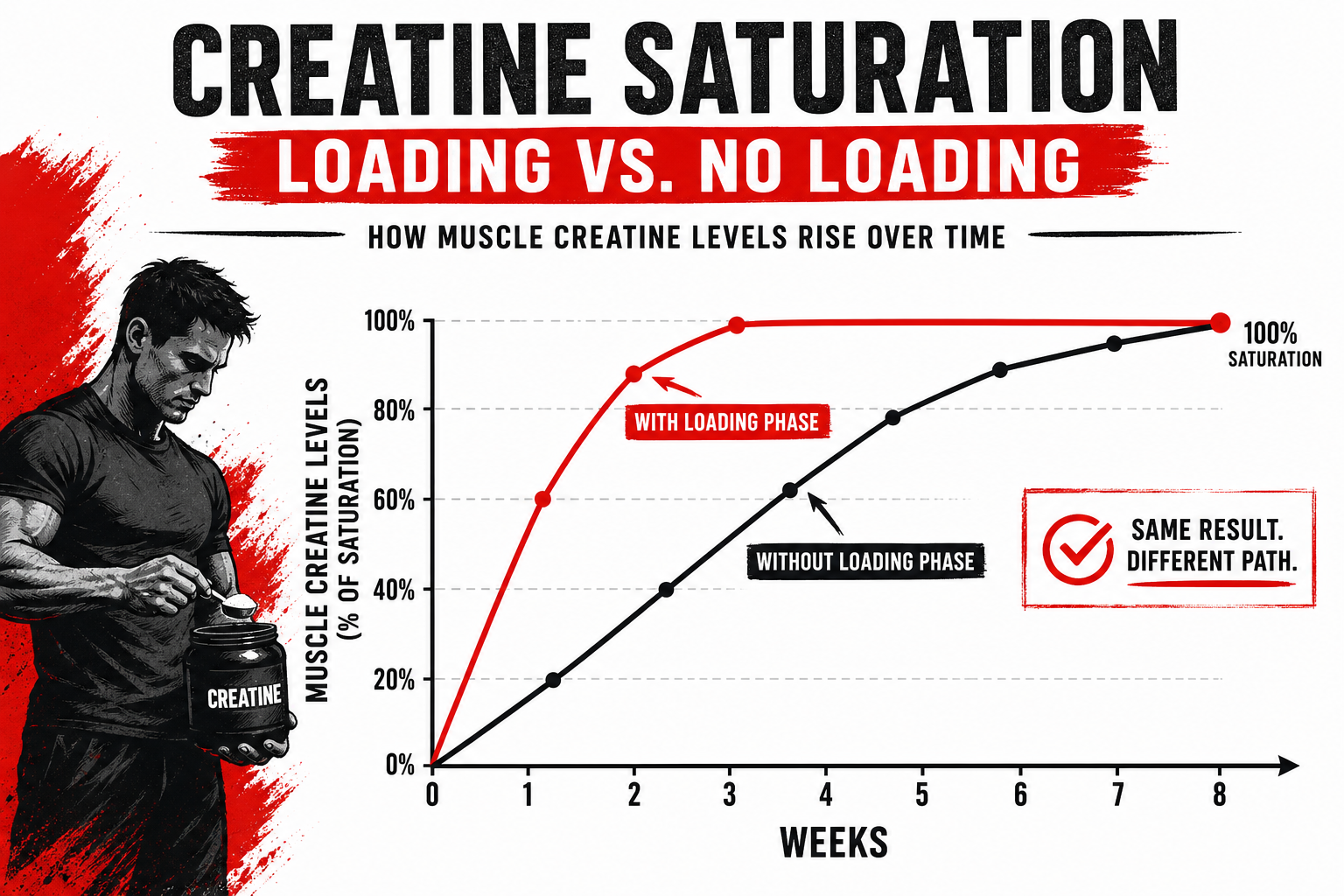
A landmark loading protocol uses 20 grams per day split across four or five doses for five to seven days, which saturates muscle creatine stores quickly. Maintenance then drops to 3 to 5 grams daily. You can also skip the loading phase and take 3 to 5 grams per day for three to four weeks to reach the same saturation level, just at a slower pace.
The main knocks against monohydrate are water retention and occasional GI discomfort during the loading phase. Some lifters report temporary bloating or cramping when they push high doses on an empty stomach. These issues tend to fade after the loading phase ends, and many athletes never experience them at all.
For raw cost-per-gram of creatine delivered, monohydrate is hard to beat. It is widely available, affordable, and the research base behind it is genuinely enormous compared to every other creatine form.
Creatine HCL: The Newer, More Soluble Option
Creatine HCL (hydrochloride) bonds the creatine molecule to hydrochloric acid, forming a salt that dissolves dramatically better in water than monohydrate. Studies estimate creatine HCL is roughly 38 to 41 times more water-soluble than the monohydrate form, meaning a much smaller volume of liquid can dissolve a full dose.
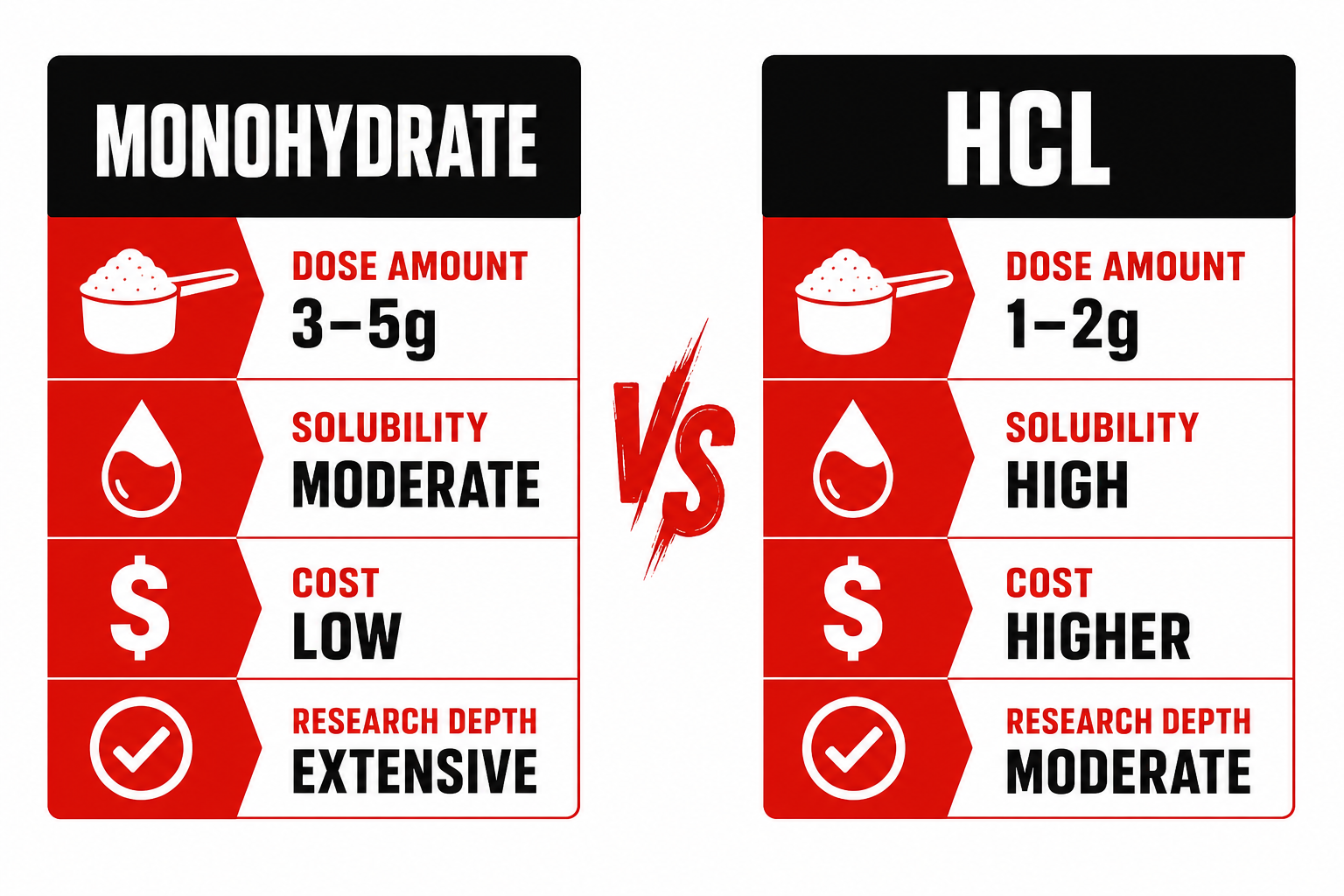
Because of that improved solubility, the commonly cited effective dose for creatine HCL drops to around 1.5 to 3 grams daily, with no loading phase required. The theoretical reasoning is straightforward: better solubility may improve intestinal absorption, so less total product is needed to saturate muscle creatine stores.
On the GI tolerance side, creatine HCL tends to cause fewer complaints. Less undissolved creatine sitting in the gut means less bloating and less water retention for users who are sensitive to high monohydrate doses. That makes HCL a genuinely useful option for athletes who have tried monohydrate and found the side effect profile annoying enough to drop the product.
The tradeoffs: creatine HCL costs more per gram, and the human research base is considerably thinner. Most head-to-head trials have found similar strength and body composition outcomes between both forms when doses of actual creatine, not just the salt, are matched. HCL has not been proven superior in controlled human studies.
Side-by-Side Comparison
| Factor | Creatine Monohydrate | Creatine HCL |
|---|---|---|
| Research depth | Extensive (decades) | Limited but growing |
| Daily dose | 3 to 5 grams | 1.5 to 3 grams |
| Loading phase | Optional (5 to 7 days at 20g) | Not typically needed |
| Solubility | Moderate | ~38 to 41x higher |
| Bloating risk | Moderate during loading | Low |
| Water retention | Possible, usually temporary | Minimal |
| Cost per dose | Lower | Higher |
| Long-term safety data | Robust | Less established |
Both forms drive muscle creatine saturation and phosphocreatine replenishment. The table above is about delivery, tolerance, and price, not about which one builds more muscle.
What the Research Actually Shows
This is where the creatine monohydrate vs creatine hcl debate gets real. The research on monohydrate is backed by hundreds of controlled trials. A 2025 meta-analysis reviewing 685 trials found no evidence of harm from creatine monohydrate supplementation, including no negative impact on kidney or liver function markers.
For creatine HCL, a 2024 study comparing both forms on bench press strength gains found results of approximately plus 12 percent for HCL versus plus 13 percent for monohydrate, with similar recovery markers across both groups. A 2023 meta-analysis found no evidence that creatine HCL produces superior muscle creatine loading or performance outcomes versus monohydrate when actual creatine content is equated.
The honest summary: monohydrate wins on volume and depth of evidence. HCL wins on GI tolerance and convenience for sensitive users. Neither has proven definitively superior for building strength or muscle when dosing is calibrated correctly.
For lifters who take their training seriously, this distinction matters. Consistent daily use is what saturates muscle creatine stores over time. Whichever form you actually take every day without skipping is the better choice for you.
Dosing, Timing, and Practical Use
Timing is simpler than the supplement industry makes it sound. Research on when to take creatine consistently shows that daily consistency matters more than the exact window. Pre-workout, post-workout, or with a meal all produce similar long-term results.
For creatine monohydrate:
- Loading phase (optional): 20 grams per day split into 4 doses for 5 to 7 days
- Maintenance: 3 to 5 grams per day
- Mix with at least 8 to 12 ounces of water or juice to improve absorption
For creatine HCL:
- No loading phase needed
- 1.5 to 3 grams per day
- Dissolves easily in smaller amounts of water
- May be preferable mixed into a pre-workout shake
Pairing creatine with a carbohydrate source may improve uptake slightly, as insulin signaling supports creatine transport into muscle cells. This works for both forms.
Who Should Pick Monohydrate
Go with creatine monohydrate if you want the form with the deepest research backing, the lowest price point, and zero concern about GI issues (or you have not experienced them before). It is also the right call if you want to run a loading phase to saturate muscle stores quickly before a competition block or training peak.
Powerlifters, strongman competitors, and anyone in a serious strength block will find monohydrate delivers exactly what the research promises at a fraction of the cost of HCL.
Who Should Pick Creatine HCL
Creatine HCL makes sense if you have tried monohydrate and experienced real GI discomfort, bloating, or water retention that affected how you looked or felt during prep. It also works well for athletes who prefer not to run a loading phase and want a smaller, easier-to-mix daily dose.
First responders and military athletes working irregular schedules sometimes prefer HCL because the lower dose volume is simple to drop into a shake without fuss. If compliance and stomach comfort are your limiting factors, HCL is worth the extra cost.
How SuppDawg Approaches Creatine
SuppDawg Supplements was built by a firefighter, paramedic, and competitive strength athlete who knows what it means to train hard with a demanding schedule. Buff Dawg, our daily creatine formula, uses fully disclosed ingredients at effective doses, with no proprietary blends, no underdosing, and no guesswork on your labels.
Transparency is non-negotiable. The supplement industry has enough products hiding behind mystery blends. If you want to know exactly what you are taking and why, that is the standard we hold ourselves to every batch.
If you are stacking creatine with a pre-workout, our Shock Collar high-stimulant pre-workout and Bite Down non-stim pre-workout are both built around the same no-proprietary-blend philosophy. Pair creatine with whichever pre-workout fits your caffeine preference and your training block.
Making the Final Call
Creatine monohydrate vs creatine HCL is not a fight with a clear knockout winner. It is a choice based on your budget, your GI tolerance, and how much you value research depth versus dosing convenience.
If you are new to creatine, start with monohydrate. It is proven, affordable, and the research is ironclad. If you have had GI issues or want a cleaner-feeling daily dose, HCL is a legitimate alternative worth trying.
Either way: take it every day, train hard, and let consistency do the work. That is how results happen. All Bite. No Bark.
Frequently Asked Questions
Is creatine HCL better than creatine monohydrate for building muscle? Research shows both forms produce similar strength and muscle gains when actual creatine content is matched. Monohydrate has far more studies behind it.
Can I take creatine HCL without a loading phase? Yes. Creatine HCL does not require a loading phase. A daily dose of 1.5 to 3 grams is the standard protocol, and muscle saturation builds consistently over time.
Does creatine monohydrate cause bloating? Some users experience temporary bloating or GI discomfort during a high-dose loading phase. It usually resolves after moving to a maintenance dose of 3 to 5 grams daily.
Which form of creatine is cheaper? Creatine monohydrate is significantly less expensive per gram of creatine delivered. Creatine HCL costs more per serving and per gram of pure creatine.
Can I mix creatine with my pre-workout? Absolutely. Creatine mixes well with both stimulant and non-stimulant pre-workouts. Daily consistency with dosing matters far more than exact timing or stacking method.
Supplement information is provided for educational purposes. Review the product label, directions and warnings, and consult a qualified healthcare professional before use when appropriate. These statements have not been evaluated by the Food and Drug Administration. This information is not intended to diagnose, treat, cure or prevent any disease.
About the author
Christopher Northern — Christopher Northern is the founder of SuppDawg, a career firefighter/paramedic and strength-sport competitor. He writes from firsthand experience with shift work, training, and transparent supplement labels.
How this guide was prepared
This guide was reviewed against current product labels and publicly available educational sources. It is intended for general education, not diagnosis or treatment, and was last updated August 8, 2026.
When to Take Creatine for a Consistent Routine
What Is High-Stim Pre-Workout? Caffeine, Labels and Fit
Related Posts

How to Compare Creatine Monohydrate: Dose, Form and Value

Creatine Monohydrate: What Makes It the Default for Strength Shoppers

Creatine on Rest Days: Daily Dosing and Cycling Explained
